

Zindn Cold Galvanizing System, Hot dip Galvanizing, and Epoxy Zinc-rich Coating
Release time:
Apr 20,2025
The following is a comprehensive comparison and analysis of the Zindn Cold Galvanizing system and hot dip galvanizing, and epoxy zinc-rich coatings
The following is a comprehensive comparison and analysis of the Zindn Cold Galvanizing system and hot dip galvanizing, and epoxy zinc-rich coatings:
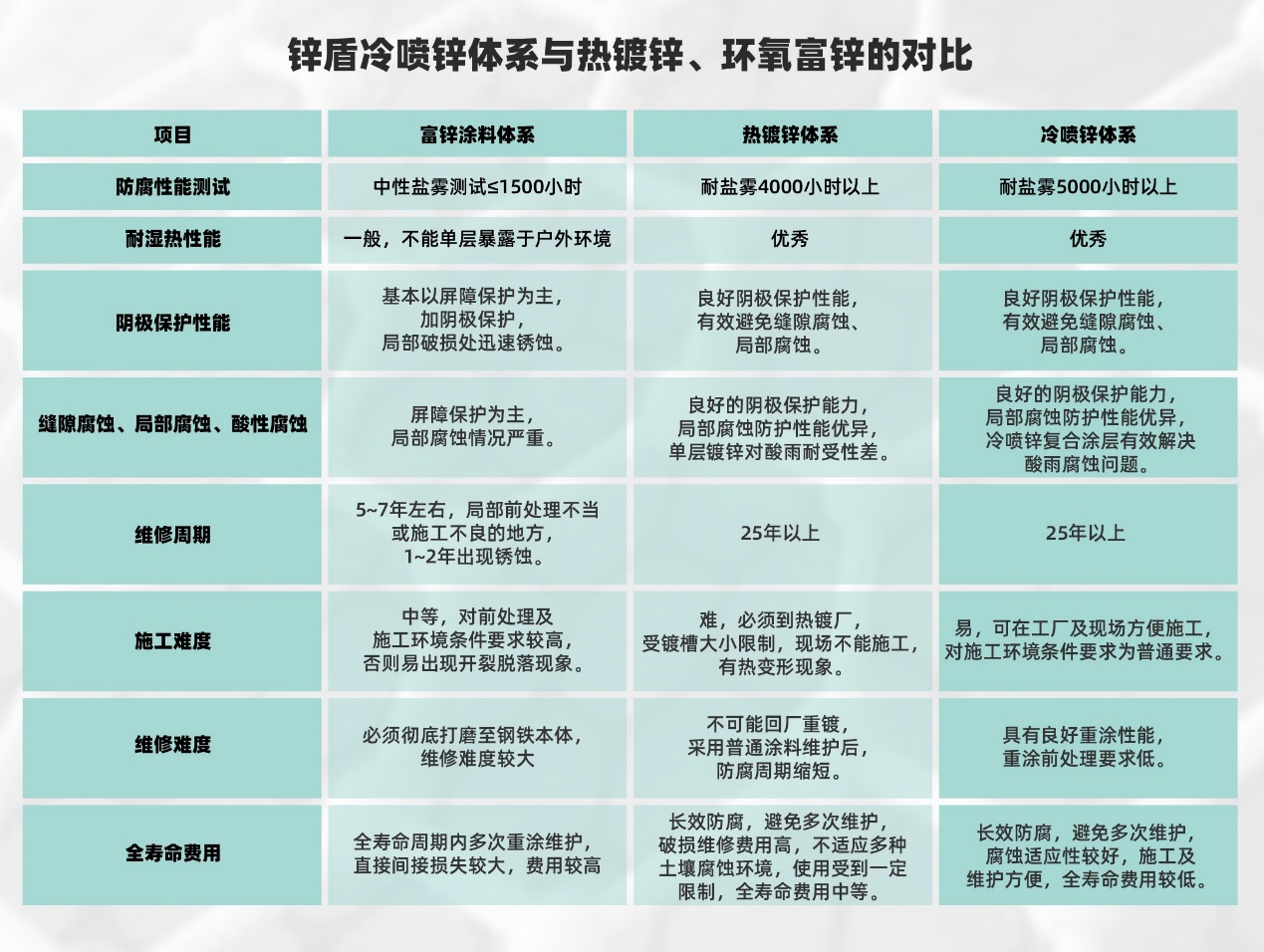
1. Anti-corrosion Principle and Protection Performance
1. Zindn Cold Galvanizing System
o Dual Protection Mechanism : Combining cathodic protection (sacrificial zinc layer) and dense barrier protection, the dry film zinc content is ≥96% , which is close to the protection effect of hot-dip galvanizing, but the normal temperature construction avoids the microporous defects caused by thermal expansion and contraction .
o Triple Protection Extension : The exposed layer can be transformed into dense zinc salt in an acid-base-salt environment to enhance the barrier effect .

1. Hot Dip Galvanizing
o Cathodic protection relies on the metallurgical combination of metallic zinc and the substrate, but the high-temperature process is prone to producing micropores, and the corrosion rate is as high as 0.11mm/ year ( 0.035mm/ year for cold-sprayed zinc ).
2. Epoxy Zinc-rich Primer
o Zinc powder ( 30%-80% ) provides limited cathodic protection through resin adhesion. The insulation of the resin hinders current conduction, and its protective ability is weaker than that of cold galvanizing compound.
2. Corrosion Resistance Comparison
· Salt Spray Test
o Cold galvanizing: Single layer ( 80μm ) has salt spray resistance of ≥3000 hours, and the matching three-coat system ( 260μm ) has a longer anti-corrosion period.
o Hot-dip galvanizing: The coating falls off after 50 days of salt spray, and the corrosion rate is fast.
o Epoxy zinc-rich: Bubbles appeared after 21 days of salt spray, and the coating separated from the substrate after 50 days.
· Adaptability to harsh environments
o Cold galvanizingc: Excellent anti-cracking performance in high temperature ( -20 ℃ ~60 ℃), high acid and alkali, and high humidity environments, and no shedding at the weld.
o Epoxy zinc-rich: It is easy to crack in special-shaped structures and welds, and has poor weather resistance.
3. Construction and Economy
1. Convenience of Construction
o Cold galvanizing: Construction at room temperature, supports brushing, spraying, and other methods, surface treatment only requires Sa2.5 level, fast drying, and no gun clogging.
o Hot-dip galvanizing: requires a high-temperature molten zinc layer; the process is complex and has restrictions on the size of the substrate.
o Epoxy zinc-rich: two-component preparation, long construction period, and high surface treatment requirements.
2. Value for money
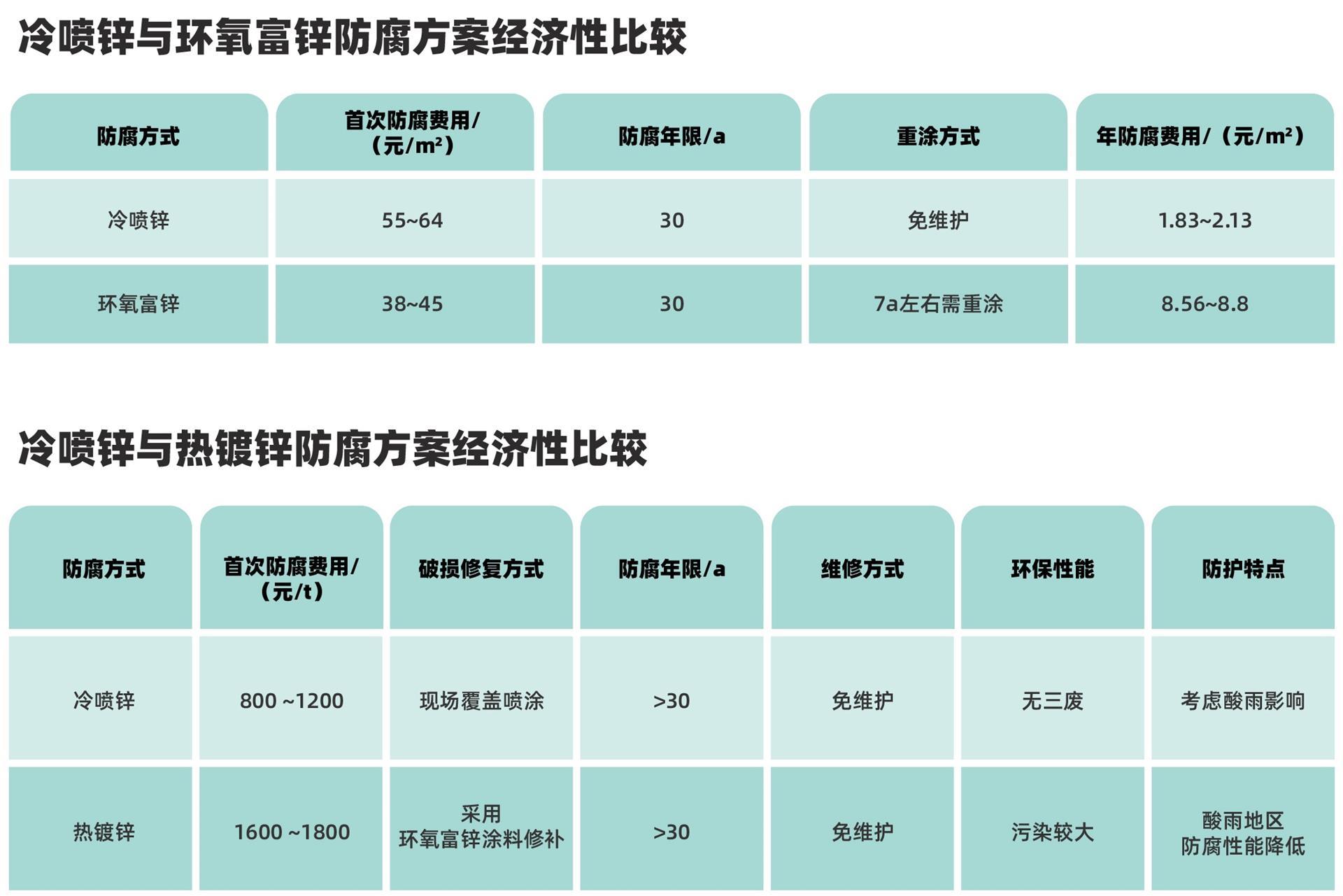
o Cold galvanizing: The life cycle cost is lower than hot-dip galvanizing and epoxy zinc-rich, and the maintenance interval is longer.
o Epoxy zinc-rich: Low zinc content leads to high recoating frequency and increased long-term costs.
IV. Application Scenario Recommendations
· Cold Galvanizing: It is used in the petroleum, chemical industry, marine engineering, and other fields where long-term corrosion protection is required. It is especially suitable for complex welds and special-shaped structures.
· Hot-dip Galvanizing: Suitable for batch galvanizing of small components, but caution should be exercised in high temperature environments.
· Epoxy Zinc-rich: short-term protection in ordinary industrial environments, limited cost-effectiveness.
Summarize
The Zindn cold galvanizing system is superior to hot-dip galvanizing and epoxy zinc-rich in terms of anti-corrosion performance, construction convenience, and economy, and is particularly suitable for harsh corrosive environments and long-term protection needs.

Contact Us
Headquarters Tel:
Business Hotline:
E-mail:
WhatsApp/Wechat:



Quick Navigation
Online Message
If you have any product related questions, please feel free to contact us!
Copyright © 2025 Wuxi Huadong Zindn Science and Technology Co., Ltd.